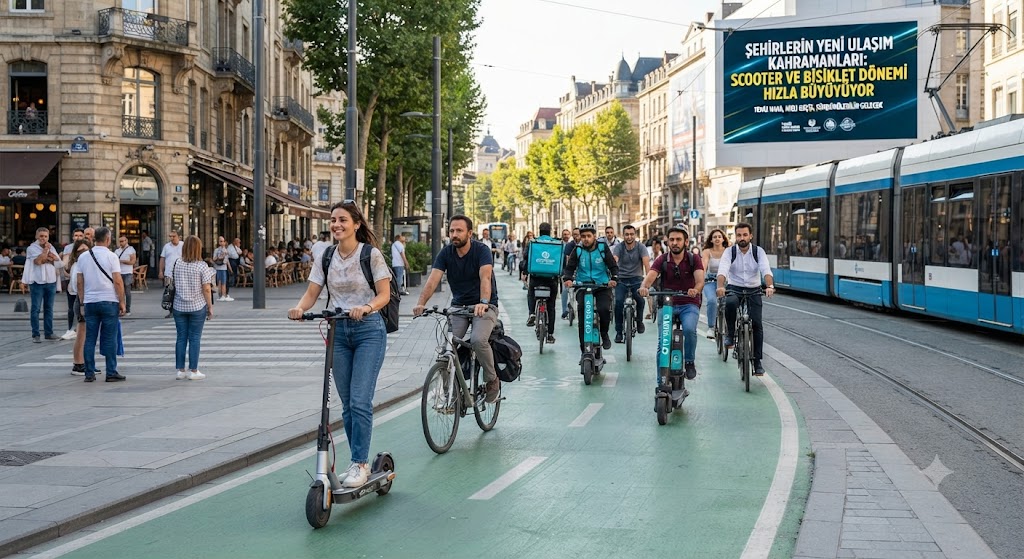
Growing traffic congestion, air pollution, and global commitments to reduce carbon emissions are reshaping the way people move around cities. Electric scooters and bicycles are no longer seen merely as alternative means of transportation—they are becoming an essential component of sustainable urban mobility.
From Europe and Asia to North America and the Middle East, cities are expanding cycling infrastructure, investing in micromobility solutions, and implementing policies that encourage environmentally friendly transportation. According to urban mobility experts, a significant share of short-distance trips will increasingly be made by bicycles and electric scooters in the years ahead.
A Smart Solution to Urban Congestion
Most urban journeys are less than five kilometers in length. Using private cars for these short trips contributes to traffic congestion, increases carbon emissions, and reduces the overall efficiency of city transportation systems.
Electric scooters and bicycles provide a practical alternative thanks to their low energy consumption, accessibility, and time-saving advantages. When integrated with public transportation networks such as metro, tram, and bus systems, they create seamless multimodal mobility, making urban transportation faster and more efficient.
Micromobility Investments Continue to Grow
Leading cities around the world now recognize micromobility as a key pillar of future transportation systems. New cycling lanes, secure parking facilities, charging stations, and digital rental platforms are becoming standard features of modern urban planning.
Shared scooter and bike services are also transforming mobility habits. With mobile applications enabling users to locate and rent a vehicle within minutes, these services have become especially popular among commuters, students, and tourists.
Building Cleaner and More Livable Cities
The widespread adoption of electric micromobility contributes not only to more efficient transportation but also to cities’ environmental sustainability goals. Reduced fossil fuel consumption, lower greenhouse gas emissions, and decreased noise pollution are among the most significant benefits.
At the same time, increasing bicycle and scooter usage is encouraging cities to rethink the allocation of public space. Wider sidewalks, green corridors, dedicated cycling routes, and safer streets are becoming defining features of people-centered urban design.
A Key Component of Smart Cities
Micromobility is no longer viewed simply as a transport option—it is becoming an integral part of the smart city ecosystem. AI-powered fleet management, real-time usage analytics, smart parking solutions, and digital payment systems enable municipalities and operators to optimize services while improving operational efficiency.
Urban planners increasingly see bicycles and scooters as vital connectors that complement public transportation and support integrated mobility networks.
Kent yaşamının daha sürdürülebilir, daha sağlıklı ve daha erişilebilir hale gelmesi için mikro mobilite yatırımlarının önümüzdeki yıllarda hız kazanması bekleniyor. Ulaşım uzmanlarına göre rekabet artık yalnızca daha fazla araç üretmekte değil; insanlara daha temiz, daha güvenli ve daha akıllı hareket etme imkânı sun